Steel, Soap, and Satellites
How Godrej Became India’s Most Trusted Brand

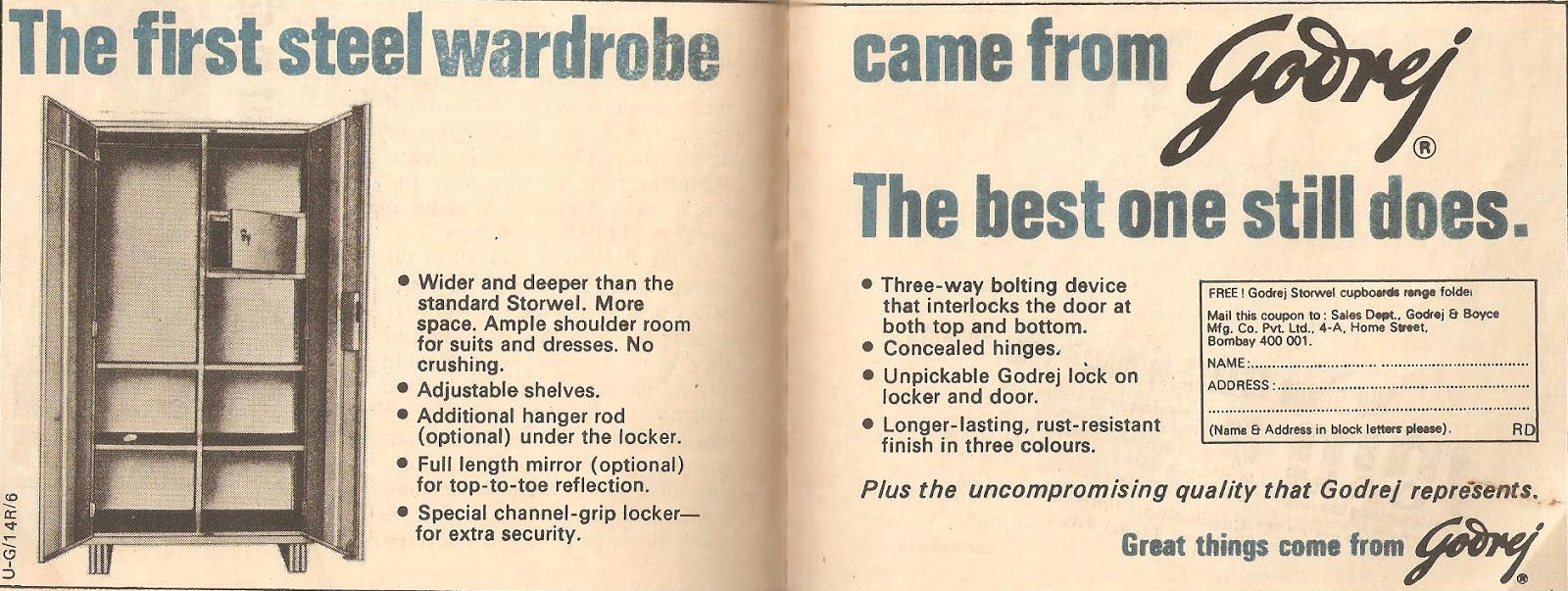
Ask any middle-class family in India, and they will point to their Godrej Almirah as the most permanent member of their household. Godrej is a word synonymous with safety and has become a household name across the country. It is a common refrain: “We don’t buy a cupboard, we buy a Godrej.” It represents a rare and iron-clad trust in the company that modern companies would kill for (pun intended).
But that trust wasn’t built in a day. It had humble beginnings, and the original family name (surprise alert!) wasn’t even Godrej; it was Gootherajee. Kind of like how Bengalis had their last names grotesquely anglicised from Mukhopadhyay to Mukherjee, Gangopadhyay to Ganguly, and so on. Born in 1868 into a wealthy Bombay real estate dynasty, Ardeshir Godrej was a bit of a misfit. Instead of managing estates, he spent his time tinkering: he was obsessed with tools, toys, and the hidden logic of how things worked. That knack was more than a hobby; it was an obsession.
In 1890, he married Bachubai, a union meant to mark the start of a new chapter. However, tragedy struck just a year later when Bachubai fell to her death from the Rajabai Clock Tower. Devastated, Ardeshir never remarried. In 1894, he was shipped off to Zanzibar to argue a case, but his legal career was already on life support. As his biographer, B.K. Karanjia writes, Ardeshir realised he was too fair-minded for the courtroom: “Instead of seeing my side of the case, I saw both sides, the plaintiff's as well as the defendant's. In this divided state of mind, I realised I'd make a very poor lawyer, whichever side I took.”
After returning to Bombay, Ardeshir was employed in a pharmacy assisting a chemist. It was humble work, yet his mind raced: what if surgical instruments like scalpels, forceps, and pincers were made in India? It was a revolutionary idea, but to realise it, he needed to secure funds. A family friend, Merwanji Cama, came to his rescue. Yet, being the proud and principled man he was, Ardeshir insisted on treating the financing as a formal debt rather than a gift.
However, the venture was short-lived. The proprietor refused to brand the instruments as “Made in India,” fearing it would damage their marketability, arguing that while Indian antiques were fine, surgical instruments were another matter entirely. Ardeshir refused to compromise his national pride for profit; tensions ensued, and he eventually walked away dejected, leaving his first industrial dream behind.
One morning, Ardeshir was reading a daily newspaper when his eyes chanced upon an article on the rise of burglaries in Bombay. It was his “Eureka” moment and the opportunity he had been waiting for. He realised that a better lock was needed and began researching the subject, discovering that existing Indian locks were inefficiently handmade. He rushed to Cama, apologised for his inability to repay the initial loan immediately, and described his plans for a new venture to manufacture a lock guaranteed to be “unpickable”. Enthused by the idea, Cama promised to raise the necessary capital, and Ardeshir set out to revolutionise the industry.
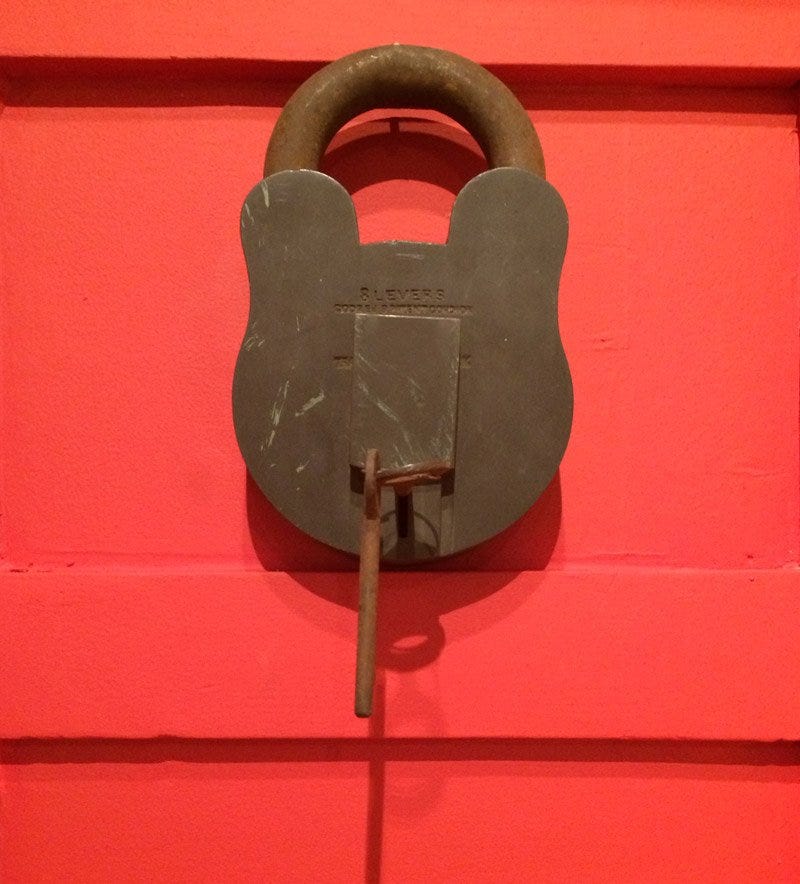
Production began on May 7, 1897, in a small, decrepit shed of about 215 square feet in Bombay. Hiring skilled workers from Gujarat and Malabar, Ardeshir began to create high-security locks under the Anchor brand. Together with Cama's son, he established the firm of Godrej & Boyce. He was obsessed with quality, insisting that each lock and key pair be unique and using modern machinery to craft keys rather than filing them by hand.
A few years later, Ardeshir patented one of his most ingenious inventions: the Gordian Lock. This device came with two distinct keys that could both lock and unlock the mechanism. However, the second key possessed a special function; it could be used to modify the inner workings of the lock, effectively rendering the first key useless. This innovation was soon followed by a design based on the Detector Lock, which featured a bolt that would throw if an incorrect key was used, alerting the owner to any tampering attempts.
Towards the turn of the century in 1901, Ardeshir turned his focus to creating safes that were not only burglarproof but fireproof, realising that most products on the market failed to meet those standards. After experimenting with dozens of designs and holding innumerable discussions with his engineers, he determined that the only way to ensure security and stability was to manufacture the safe from a single sheet of steel. The result was a feat of precision engineering featuring sixteen bends where the steel was folded forward and then twice more to form a solid front door frame. Unlike traditional models, the joints were welded rather than riveted, and the entire coffer was protected by three patents. The first of these safes was introduced to the market in 1902.
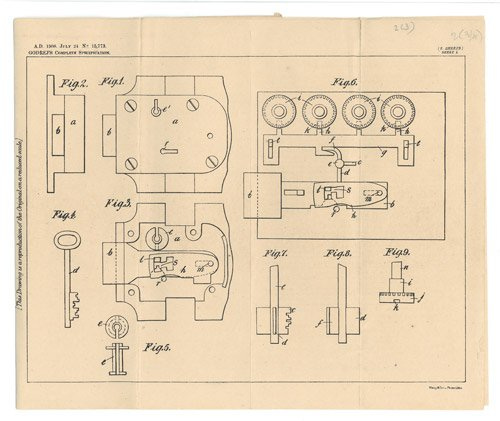
The brothers’ innovation continued in July 1908 when Ardeshir and his brother Pirojsha applied for a British patent, which was granted in October 1909, for the world’s first springless lock. This invention, attributed to Pirojsha, solved a major flaw in locksmithing: traditional springs were prone to dirt and breakage, which often left the levers in an open, vulnerable position. By eliminating the spring, they ensured the lock was more durable and significantly harder for burglars to pick.
The reputation of these safes eventually reached the highest levels of the British Empire. During the 1911 Delhi Durbar, King George V and Queen Mary entrusted their most valuable belongings to Godrej safes. It was a poetic victory for Ardeshir; the same colonial establishment that had once dismissed the idea of “Made in India” technology was now relying on his engineering to protect the Crown’s own treasures.
Following the success of his safes, Ardeshir decided to experiment with soap. At the time, almost all soaps in India were made with tallow or animal fat, which created a significant ethical and religious barrier for many. Sensing a need, Ardeshir experimented with indigenous vegetable oils to create a product that was high-quality yet deeply respectful of local sensibilities. Critics and chemists claimed it was impossible to produce soap without animal fat, yet he persevered.
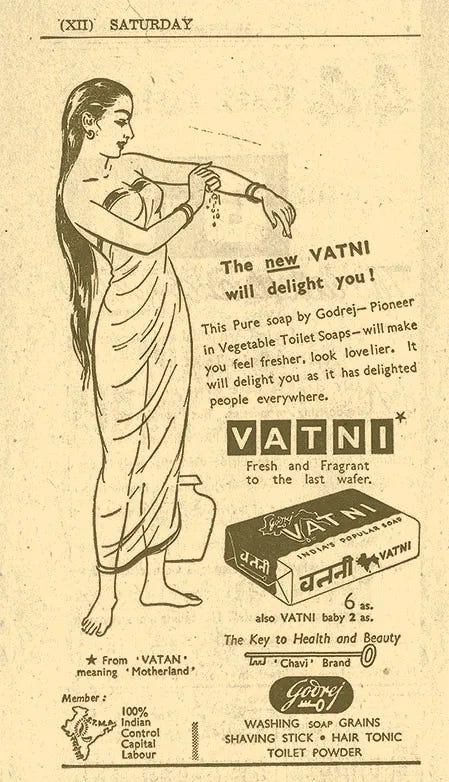
In 1918, after a series of experiments with palm and coconut oils, he launched Chavi: the first soap in the world made entirely from vegetable oil. It was a landmark invention that bolstered the movement for indigenous goods and served as a bold statement of self-reliance. Ardeshir followed this in 1920 with No. 1, and later No. 2 and Vatni (coined from the Hindustani Vatan, or motherland). These brands earned the faithful endorsement of figures like Annie Besant and Rabindranath Tagore, while Mahatma Gandhi himself famously protected the brand, calling Ardeshir a "brother" and refusing to bless any competitor who might harm his business.
While Ardeshir provided the spark of genius, it was his brother Pirojsha who scaled the company into an industrial giant. After Ardeshir passed away in 1936, Pirojsha took the reins and expanded the business into the massive Godrej Garden City in Vikhroli. The true testament to their ‘uncompromising quality’ occurred eight years after Ardeshir’s death during the 1944 Victoria Dock explosion in Bombay. A massive blast on a freighter triggered fires that levelled much of the docklands. When the rubble was finally cleared, many Godrej safes were recovered. Despite being subjected to temperatures that melted other metals, the papers and valuables inside the Godrej safe remained remarkably unscathed!
As India gained independence from British rule in August 1947, Godrej played a critical role in the world’s largest democratic exercise: the first general elections of 1951. Robert Trumbull, a writer for The New York Times, famously dubbed the event an “unprecedented experiment in democracy.” Godrej was commissioned to manufacture the ballot boxes, and the factory produced over 1.2 million steel units at a feverish pace. This massive undertaking ensured that the first votes of a sovereign India were kept as firmly locked and shut as the Crown Jewels once were.
The 1950s saw Godrej pivot from heavy steel to high-precision machinery, proving that Indian engineering could compete with the world’s best. In 1955, they launched the Godrej M-9, the first typewriter manufactured in India. At a time when Western giants like Remington and Olivetti dominated the global market, the M-9 was an achievement so significant that Prime Minister Jawaharlal Nehru hailed it as a symbol of industrial self-reliance.
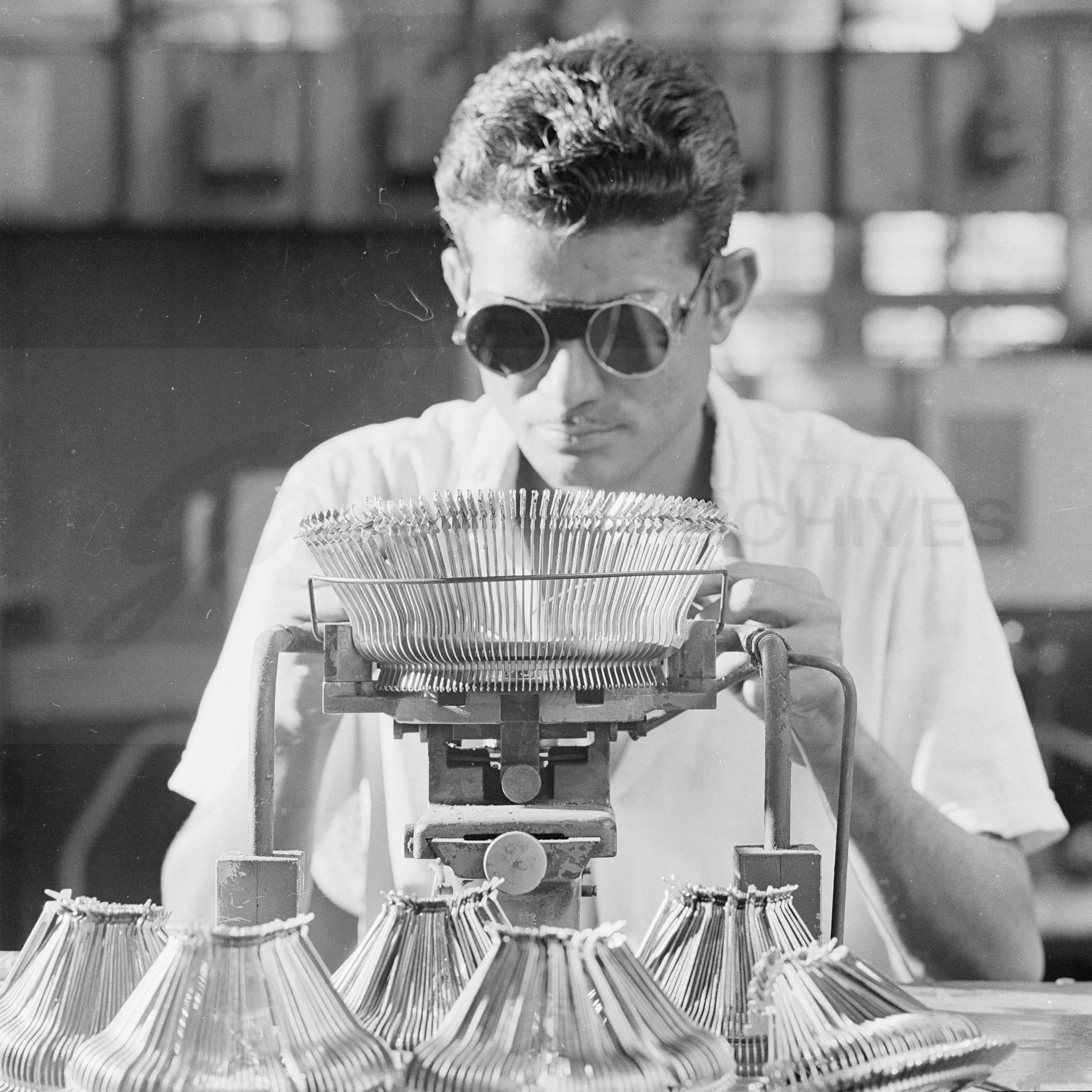
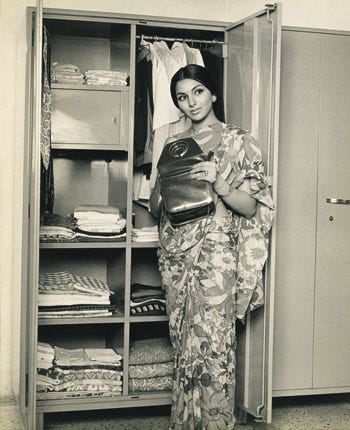
This was followed closely in 1958 by the launch of the first Indian-made refrigerator. For the first time, an Indian household could be powered by homegrown technology that was every bit as sophisticated as its Western counterparts. As the nation evolved through the 1960s and 70s, so did the tastes and aspirations of the Indian people. The humble almirah was no longer just a dull grey box to store valuables; it transformed into the colourful Storwel, becoming a mandatory fixture in every urban home and a centrepiece of wedding trousseaus. Godrej became a lifestyle ecosystem, introducing iconic brands like Cinthol that defined the scent of a generation. It was during these decades that the brand moved beyond mere utility; it became an emotional anchor for the middle class, representing the stability and progress of a newly independent India.
By the 1980s, Godrej’s reputation for quality and durability had caught the attention of the Indian government’s most critical scientific departments. This was the decade when Godrej moved into high-tech industrial manufacturing, transitioning from the mechanical complexity of typewriters to the high-stakes engineering required for defence and space exploration. In 1985, Godrej officially partnered with the Indian Space Research Organisation (ISRO). Their collaboration led to the production of the Vikas engine, the powerful workhorse that would propel India’s space ambitions.
Towards the 1990s, as India opened its markets to foreign investors and abolished the License Raj, it ushered in a new era for Indian companies, including Godrej. The company expanded its footprint across Africa, Southeast Asia, and Latin America, while simultaneously doubling down on the family’s founding commitment to the environment.
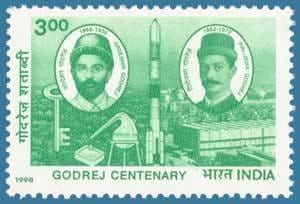
This legacy first began in the 1940s with Sohrabji Godrej’s initiative to preserve over 1,700 acres of mangrove forests in Vikhroli, an effort supported by the ‘Birdman of India,’ Salim Ali. Today, these mangroves act as a massive carbon sink for Mumbai, preserving the ecosystem for generations to come. As Mervin Preethi put it in her article for The Better India, this was done ‘not as a CSR project, not for branding, and not as a compliance tick box—but as an act of belief—a belief that business and biodiversity can exist harmoniously’.
In 1994, Godrej ventured into a new form of 'protection.' Mosquitoes are a persistent problem across coastal India, particularly in hot, humid climates where they often thrive. The group decided to acquire Translektra, its first major acquisition, bringing leading brands such as Goodknight and HIT into the Indian market. This move proved to be a major success and a protective shield for households, establishing Godrej as a leading giant in the household insecticides market.

Even as it went global, the spirit of Ardeshir’s ‘tinkering’ remained at the core of the business. This is most evident in the group’s aerospace division. The same company that once made the locks for the Delhi Durbar now manufactures critical components for India’s lunar and martian missions. From the Chandrayaan missions to the Mangalyaan Mars Orbiter, Godrej’s high-precision valves and engines have been instrumental in putting India on the celestial map.
The 128-year journey of Godrej is more than just a corporate success story; it is a mirror of India’s own evolution. Whether it is a satellite engine speeding across outer space, a sustainable apartment building in a green township, or a digital locker safeguarding a family's precious belongings, the name continues to be a silent pledge that it will uphold and preserve a 'people-first' mindset rather than concentrating only on profits.
"Ask any middle-class family in India, and they will point to their Godrej Almirah as the most permanent member of their household" 😂 Alright Jay, you got us
Wow, Jay! I love this article! You have such a smooth and compelling way of writing that snatches my interest. I am glad to now know about the Godrej company. I’m so impressed how they built up India’s middle class domestically. And of course, I love their efforts to expand mangrove forests :)